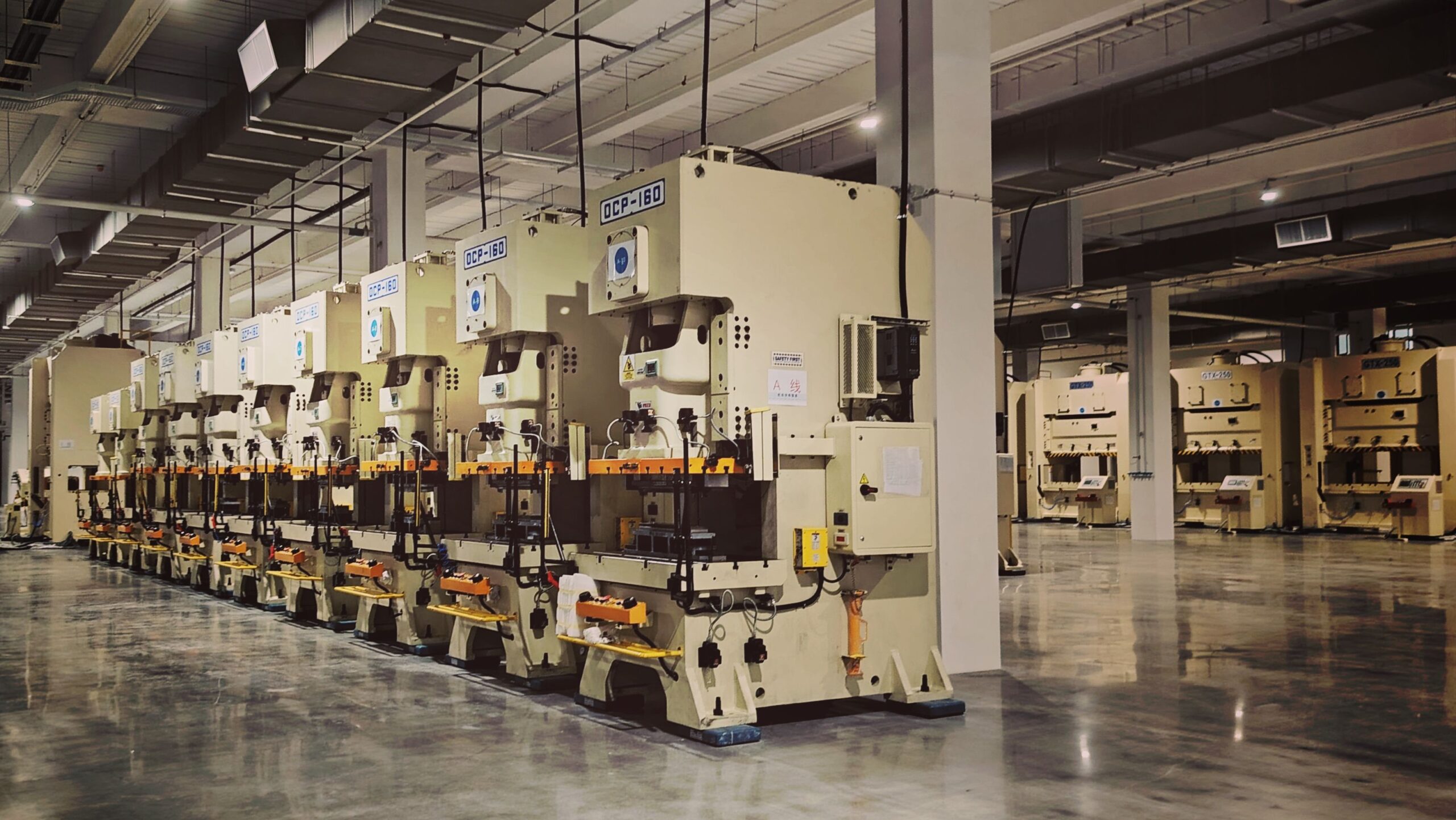
A
custom hydraulic press offers manufacturers the opportunity to design equipment that matches their exact production requirements instead of adapting their workflow to a standard machine. Every manufacturing process is unique, with different materials, production volumes, product dimensions, and quality expectations. Choosing a custom hydraulic press allows a company to optimize every aspect of its operation for greater efficiency and consistency.
Unlike off-the-shelf equipment, a custom hydraulic press can be engineered with the precise tonnage, stroke length, working area, and automation features needed for a specific application. This flexibility helps eliminate unnecessary compromises while improving productivity and reducing operating costs.
As industries become increasingly specialized, customized machinery has become an important competitive advantage. Manufacturers that invest in equipment tailored to their processes often achieve better product quality, shorter production cycles, and improved long-term profitability.
Custom Hydraulic Press Design Based on Business Requirements
The design process for a custom hydraulic press begins with understanding the customer's production environment. Engineers evaluate the type of materials being processed, the required force, production speed, available factory space, and future expansion plans.
Some manufacturers require compact presses that fit into limited floor space, while others need large heavy-duty systems capable of producing enormous amounts of force. A custom hydraulic press makes it possible to meet these unique demands without unnecessary features that increase cost or complexity.
The frame can be designed as an H-frame, C-frame, four-column press, or another specialized configuration depending on the intended application. Hydraulic cylinders, pumps, control systems, and tooling can all be selected to provide the ideal balance between performance, reliability, and efficiency.
Modern computer-aided engineering allows manufacturers to simulate machine performance before production begins. This reduces development risks and ensures that the finished custom hydraulic press performs exactly as expected.
Custom Hydraulic Press Technology Improves Efficiency
Modern technology has significantly enhanced the capabilities of every custom hydraulic press. Advanced hydraulic systems now provide precise control over pressure, speed, position, and force throughout every production cycle.
Electronic proportional valves allow operators to make extremely accurate adjustments that improve product consistency while reducing material waste. Variable-speed pumps generate hydraulic pressure only when required, lowering energy consumption and reducing operating expenses.
Programmable Logic Controllers (PLCs) allow manufacturers to store multiple production programs. This makes it easy to switch between products without extensive manual adjustments, increasing flexibility for businesses that manufacture different components.
Touchscreen interfaces provide operators with real-time production information, while integrated sensors continuously monitor hydraulic pressure, oil temperature, cycle times, and machine performance. These intelligent systems help maintain stable production quality while minimizing downtime.
Custom Hydraulic Press Advantages for Different Industries
A custom hydraulic press can be adapted for virtually every manufacturing sector. Automotive companies use customized presses to form body panels, structural components, and precision metal parts with exceptional repeatability.
The aerospace industry benefits from custom hydraulic press solutions that manufacture lightweight yet high-strength components while maintaining extremely tight dimensional tolerances. Precision is critical in aerospace production, making customized equipment particularly valuable.
Medical device manufacturers often require specialized hydraulic presses capable of producing delicate components under carefully controlled conditions. Customized systems ensure consistent quality while meeting strict regulatory standards.
Metal fabrication companies use custom hydraulic press solutions for bending, punching, embossing, deep drawing, straightening, forging, and assembly operations. Since production requirements vary considerably between manufacturers, customization often provides substantial operational benefits.
Companies involved in plastics, composites, rubber processing, recycling, and electronics manufacturing also benefit from hydraulic press systems designed specifically for their production processes.
Custom Hydraulic Press Integration with Automation
Automation has become one of the greatest advantages of investing in a custom hydraulic press. Modern production facilities increasingly rely on robotic handling systems that load materials, position components, remove finished products, and communicate directly with the press control system.
A customized hydraulic press can be designed to integrate seamlessly with existing production lines, conveyors, quality inspection equipment, barcode systems, and manufacturing execution systems. This reduces manual handling while increasing production speed and consistency.
Artificial intelligence is beginning to play an important role in hydraulic press operation. Intelligent software analyzes production data to identify opportunities for optimization and predictive maintenance. Instead of reacting to equipment failures, manufacturers can schedule maintenance before problems affect production.
Remote monitoring capabilities allow engineers to supervise custom hydraulic press performance from virtually anywhere. Real-time diagnostics improve troubleshooting while minimizing production interruptions.
Custom Hydraulic Press Delivers Long-Term Financial Benefits
Although a custom hydraulic press often requires a larger initial investment than a standard machine, many businesses achieve substantial long-term financial benefits. Equipment designed specifically for a company's production process typically operates more efficiently, resulting in lower operating costs over many years.
Customized machines often reduce production waste because every component has been optimized for the intended application. Better precision leads to fewer rejected parts, lower material consumption, and improved overall quality.
Maintenance costs can also decrease because engineers select components that match the expected production workload. Properly sized hydraulic systems experience less unnecessary wear, extending the lifespan of pumps, cylinders, seals, and valves.
A custom hydraulic press also supports future business growth. Additional automation, new tooling, or expanded production capabilities can often be incorporated later without replacing the entire machine, protecting the company's investment over time.
The Future of Custom Hydraulic Press Manufacturing
The future of the custom hydraulic press industry is closely connected to digital manufacturing and Industry 4.0 technologies. Smart factories increasingly rely on connected machines that continuously exchange production data, optimize workflows, and improve efficiency through intelligent automation.
Future custom hydraulic press systems will likely include even more advanced sensors, artificial intelligence, and cloud-based monitoring platforms. These technologies will allow manufacturers to predict maintenance requirements, optimize energy consumption, and automatically adjust production parameters based on changing operating conditions.
Sustainability will also remain a major focus. Energy-efficient hydraulic pumps, environmentally friendly hydraulic fluids, and intelligent power management systems will help manufacturers reduce both operating costs and environmental impact.
As manufacturing becomes more specialized, the demand for customized machinery will continue to grow. Businesses that invest in a custom hydraulic press gain equipment specifically engineered for their products, production methods, and long-term goals. This level of customization improves efficiency, enhances product quality, increases flexibility, and creates a stronger competitive position in an increasingly demanding global marketplace.